Buy heralogic.eu ?
We are moving the project
heralogic.eu .
Are you interested in purchasing the domain
heralogic.eu ?
domain@kv-gmbh.de · 0541-91531010
Buy heralogic.eu ?
How do I transpose the treble clef to the bass clef?
To transpose the treble clef to the bass clef, you need to move the notes down by two lines or spaces. For example, if a note is on the second line of the treble clef, it would move to the fourth line of the bass clef. Additionally, you will need to adjust the key signature to match the new clef. Keep in mind that the notes on the ledger lines may also need to be adjusted accordingly. Practice transposing between the two clefs to become more comfortable with the process. **
How can one convert the treble clef into the bass clef?
To convert the treble clef into the bass clef, you would need to move the notes down by two lines or spaces. For example, a note on the third line of the treble clef (which represents a C) would be moved down to the first line of the bass clef. Additionally, you would need to adjust the key signature to reflect the change in clef. It's important to remember that the notes themselves do not change, only their placement on the staff. **

Similar search terms for Bass Clef
Top-Angebote
Products related to Bass Clef:
-
"""Bass Phillip""" """Bass Phillip Estate Pinot Noir 2019 Red Wine - Australia""""""The first sniff reveals a bowl of bright, fresh red berry fruit aromas, with delightful purity. With additional time in the glass, some deeper vinous characters appear. A seamless poised palate lined with refined tannins on a silky textural..."92,99 $*Shipping: 0,00 $Secure redirect to the provider
-
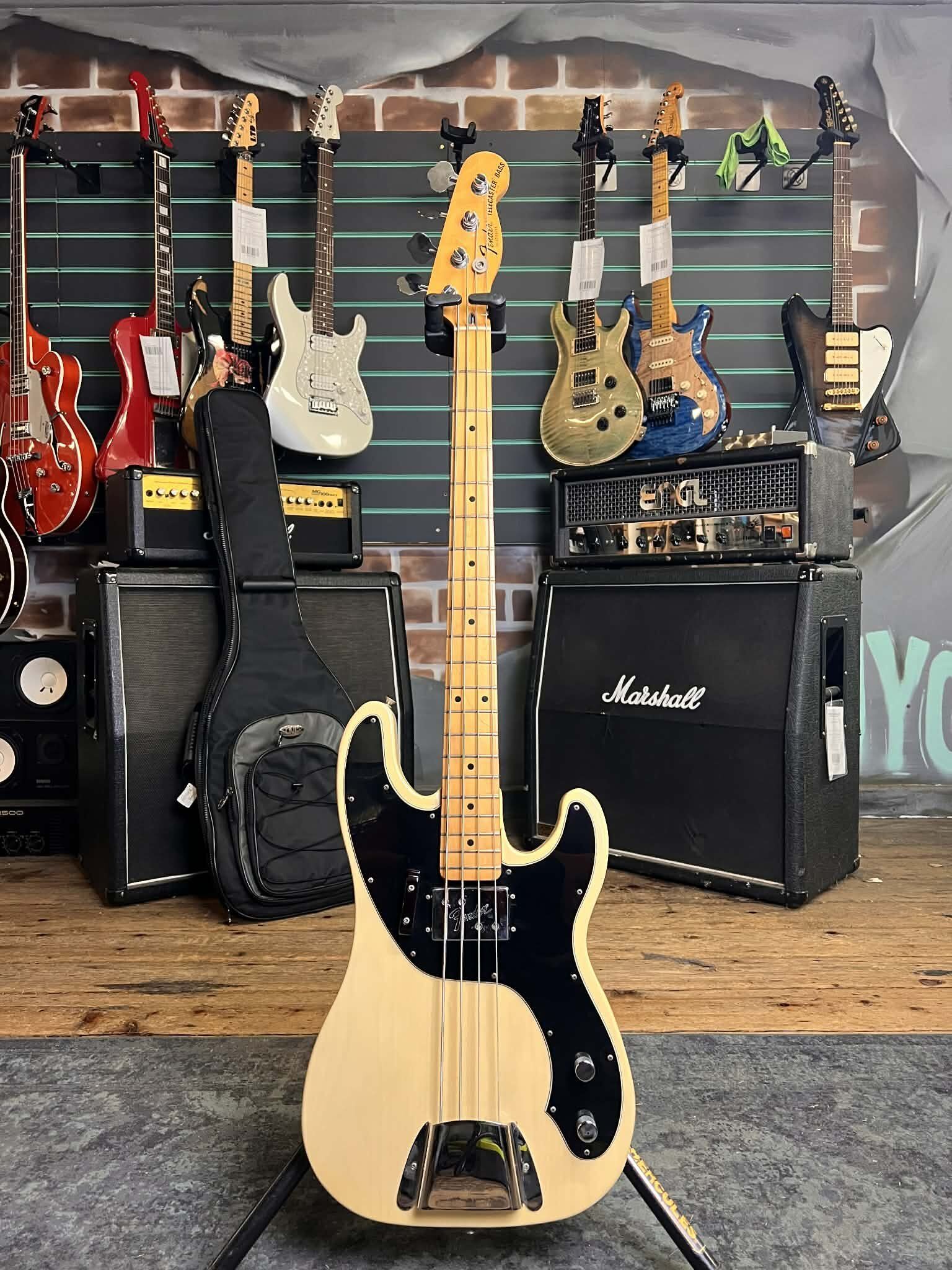
Fender Telecaster Bass Blonde 1977 Vintage Electric Bass Guitar Vintage Blonde - RefurbishedThis is a Fender Telecaster Bass in Blonde finish. Made in the USA in 1977, this bass comes from the second run of Telecaster Basses which were available from '71 up to their discontinuation in 1979. The original version was introduced in 1968, and was largely a reissue of the original Precision Bass, featuring Telecaster inspired features such as the small headstock, solitary single-coil pickup and separate control plate. In 1971 the design was updated to include some of the well-known CBS era appointments including the bullet truss rod nut and 3-bolt micro-tilt neck plate. Additionally the pickguard was re-designed to incorporate the controls and Fender's new Seth Lover-designed Wide Range pickup. The model was discontinued in '79, but has enjoyed several subsequent reissues as part of the Squier Vintage Modified series & Fender's Vintera II lineup. Naturally, a bolt-on construction is employed, and comprises an Ash body, Maple neck and 20 fret Maple fingerboard. Chrome hardware is fitted including a top-loading 4-saddle bridge with cover and Fender open-geared tuning machines. A Fender Wide Range Bass humbucking pickup is installed on the 3-ply black/white/black pickguard, and is wired to master volume & tone controls. The Maple neck plays very comfortably, with what might be described as a ‘U’ profile. This fillsthe hand reassuringly whilst still allowing for comfortable reach in all registers and promoting ergonomic thumb positioning. The double cutaway body design offers extended access into the upper register which works well with the gloss finish to the rear of the neck, allowing for smooth navigation of the 34” scale. The frets are on the larger size, feeling similar to modern medium jumbos. These feel great under the fingers, and provide the versatility required for a wide range of playing styles and techniques. The Wide Range Bass humbucker installed in this guitar had only been introduced in 1971, so the Telecaster bass was one of the first instruments to feature the pickup as factory standard. The Wide Range Bass humbucker makes use of 4 magnetised pole pieces rather than the bar magnet and screw arrangement of the Gibson PAF. Due to the difficulty of machining AlNiCo (Aluminium/Nickel/Cobalt) into threaded rod magnets, Fender chose to use CuNiFe magnets (Copper/Nickel/Iron) instead. As they produce less output than AlNiCo magnets, more windings were needed to produce enough output- resulting in a much larger enclosure than a typical humbucker. The tone is full-bodied and warm, filling out the bottom of the mix very nicely whilst still capturing all the snap and attack of your playing. A seriously cool instrument in astonishing condition. This is because between ‘77 and ‘78 Fender switched from using a string-thru bridge, to a top loading bridge. This means the body of the bass does not have holes and ferrules for a string-thru bridge. Please see the pictures of the body and neck attached to the listing. Luthier Report Our ID:...2470,00 £*Shipping: 0,00 £Secure redirect to the provider
-
Fender Precision Bass Black 1978 Vintage Electric Bass Guitar Vintage Black - RefurbishedThis is a Fender Precision Bass in Black finish. The Fender Precision bass was launched in 1951, and despite how ubiquitous it is today, actually took a few years to catch on. Electric bass guitars were a new concept at the time, and Leo Fender had to travel to jazz clubs & concert halls to promote his new instrument face to face with musicians. Several design modifications were made throughout the '50s before a major revision in '57. The headstock was changed to resemble the Stratocaster rather than the Telecaster it had originally, and the pickguard was also changed to echo the design of the Strat. The iconic split single-coil pickup was added and the bridge was changed to a top-loading design with four steel saddles. Aside from offering Rosewood fingerboard & different pickup options in the following years, the P Bass' design has remained largely unchanged since 1957, and has gone down in history as the first commercially successful bass guitar design, with an immeasurable impact in the world of music. Made in the USA in 1978, this bass comes from the height of Fender's CBS era. Whilst CBS made several small design tweaks to Fender's instruments, the P Bass remained largely unchanged save for the use of a polyurethane finish. It is clear that this particular example has stood the test of time, and has been well played & enjoyed throughout its 47 year life. Naturally, a bolt-on construction is employed and comprises an Alder body, Maple neck and 20 fret Maple fingerboard. Chrome hardware is fitted including a top-loading bridge & split-post open-geared tuning machines. A split single-coil pickup is installed and wired to master volume & tone controls. The Maple neck plays very well, with a profile which might be described as a smooth and even 'C' shape, perhaps slightly thicker than you might find on Fender's modern offerings. Paired with the 7.25" fingerboard radius, this bass has a genuinely vintage specification. Along with the finish wear from the years of playing this bass has seen, the instrument feels very inspiring in the hands. Certainly, this bass has a 'mojo' to it which is often imitated on modern instruments but never equalled. Deep, rumbling lows will fill out your mix, whilst punchy mids and a sparkly top end will ensure that you have plenty of snap and attack to provide a lively and percussive performance. pushing your bass playing forward in the mix to create more urgency in the sound. The controls keep things simple; not intruding on the playing experience but still offering ample opportunities for tone shaping. Rolling the tone control down darkens the sound nicely, allowing you to blend more easily into the mix for a more mellow, quite jazzy tone. A well-loved bass that has worked hard throughout it's life but still has plenty to give.1890,00 £*Shipping: 0,00 £Secure redirect to the provider


-
How does one read the treble clef and bass clef simultaneously?
Reading the treble clef and bass clef simultaneously requires practice and familiarity with both clefs. One approach is to focus on each hand separately at first, ensuring you can read and play the notes accurately in each clef. As you become more comfortable, try to integrate both hands together, paying attention to how the notes in each clef relate to each other harmonically. With practice, you will be able to read and play both clefs simultaneously with ease. **
-
What goes in the treble clef? What goes in the bass clef?
In the treble clef, notes higher in pitch are notated. This clef is typically used for instruments with higher ranges, such as the violin, flute, and right hand of the piano. In the bass clef, notes lower in pitch are written. It is commonly used for instruments with lower ranges, like the cello, tuba, and left hand of the piano. **
-
How does one go from the treble clef to the bass clef?
To go from the treble clef to the bass clef, you need to understand the relationship between the two clefs. The treble clef is typically used for higher-pitched instruments and notes, while the bass clef is used for lower-pitched instruments and notes. To transition from the treble clef to the bass clef, you need to understand how the notes correspond between the two clefs. This involves understanding the different positions of the notes on the staff and how they relate to each other. With practice and familiarity, you can easily transition between the two clefs. **
-
What is the notation for the bass clef in the treble clef?
In the treble clef, the bass clef is notated using ledger lines below the staff. The bass clef notes are written on the lines and spaces below the treble clef staff, with the middle C being the first ledger line below the treble clef staff. The notes in the bass clef are written lower in pitch compared to the notes in the treble clef. **


How can one learn the bass clef?
Learning the bass clef can be achieved through consistent practice and exposure. One effective way is to practice reading and playing music written in the bass clef regularly. It is also helpful to study the notes and their corresponding positions on the staff. Additionally, seeking guidance from a music teacher or using online resources and tutorials can aid in mastering the bass clef. **
What are notes in the bass clef?
Notes in the bass clef are the lower-pitched notes on the musical staff, typically played by instruments such as the cello, bass guitar, and left hand of the piano. The notes in the bass clef are represented by different symbols on the staff, with each symbol corresponding to a specific pitch. These notes provide the foundation and support for the overall harmony and rhythm of the music being played. Understanding and reading notes in the bass clef is essential for musicians who play instruments that utilize this clef. **
Top-Angebote
Products related to Bass Clef:
-
All Categories Goods Asymmetric Women Bling Crystal Tassel Earrings, Treble Bass Clef Stud, Elegant Music Jewelry Asymmetric Women Bling Crystal Tassel Earrings, Treble Bass Clef Stud, Elegant Music JewelryElegant Design for Music Lovers: This 1 pair of Women Bling Crystal Tassel Earrings are designed to add a touch of musical charm and elegance to any outfit. Featuring asymmetric music treble and bass clef stud earrings, they stand out with their...33,97 $*Shipping: 0,00 $Secure redirect to the provider
-
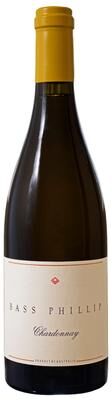
"""Bass Phillip""" """Bass Phillip Estate Chardonnay 2019 White Wine - Australia""""""A complex amalgam of nougat and almond takes your notice before a wave of white fruits steeped in a creamy vanilla sauce fills the nostrils. A wonderfully harmonious, supple, and lithe palate with everything in place - ready for a long and exciting..."70,99 $*Shipping: 0,00 $Secure redirect to the provider
-
"""Bass Phillip""" """Bass Phillip Estate Pinot Noir 2019 Red Wine - Australia""""""The first sniff reveals a bowl of bright, fresh red berry fruit aromas, with delightful purity. With additional time in the glass, some deeper vinous characters appear. A seamless poised palate lined with refined tannins on a silky textural..."92,99 $*Shipping: 0,00 $Secure redirect to the provider
-
How do I transpose the treble clef to the bass clef?
To transpose the treble clef to the bass clef, you need to move the notes down by two lines or spaces. For example, if a note is on the second line of the treble clef, it would move to the fourth line of the bass clef. Additionally, you will need to adjust the key signature to match the new clef. Keep in mind that the notes on the ledger lines may also need to be adjusted accordingly. Practice transposing between the two clefs to become more comfortable with the process. **
-
How can one convert the treble clef into the bass clef?
To convert the treble clef into the bass clef, you would need to move the notes down by two lines or spaces. For example, a note on the third line of the treble clef (which represents a C) would be moved down to the first line of the bass clef. Additionally, you would need to adjust the key signature to reflect the change in clef. It's important to remember that the notes themselves do not change, only their placement on the staff. **
-
How does one read the treble clef and bass clef simultaneously?
Reading the treble clef and bass clef simultaneously requires practice and familiarity with both clefs. One approach is to focus on each hand separately at first, ensuring you can read and play the notes accurately in each clef. As you become more comfortable, try to integrate both hands together, paying attention to how the notes in each clef relate to each other harmonically. With practice, you will be able to read and play both clefs simultaneously with ease. **
-
What goes in the treble clef? What goes in the bass clef?
In the treble clef, notes higher in pitch are notated. This clef is typically used for instruments with higher ranges, such as the violin, flute, and right hand of the piano. In the bass clef, notes lower in pitch are written. It is commonly used for instruments with lower ranges, like the cello, tuba, and left hand of the piano. **
Similar search terms for Bass Clef
-
Fender Telecaster Bass Blonde 1977 Vintage Electric Bass Guitar Vintage Blonde - RefurbishedThis is a Fender Telecaster Bass in Blonde finish. Made in the USA in 1977, this bass comes from the second run of Telecaster Basses which were available from '71 up to their discontinuation in 1979. The original version was introduced in 1968, and was largely a reissue of the original Precision Bass, featuring Telecaster inspired features such as the small headstock, solitary single-coil pickup and separate control plate. In 1971 the design was updated to include some of the well-known CBS era appointments including the bullet truss rod nut and 3-bolt micro-tilt neck plate. Additionally the pickguard was re-designed to incorporate the controls and Fender's new Seth Lover-designed Wide Range pickup. The model was discontinued in '79, but has enjoyed several subsequent reissues as part of the Squier Vintage Modified series & Fender's Vintera II lineup. Naturally, a bolt-on construction is employed, and comprises an Ash body, Maple neck and 20 fret Maple fingerboard. Chrome hardware is fitted including a top-loading 4-saddle bridge with cover and Fender open-geared tuning machines. A Fender Wide Range Bass humbucking pickup is installed on the 3-ply black/white/black pickguard, and is wired to master volume & tone controls. The Maple neck plays very comfortably, with what might be described as a ‘U’ profile. This fillsthe hand reassuringly whilst still allowing for comfortable reach in all registers and promoting ergonomic thumb positioning. The double cutaway body design offers extended access into the upper register which works well with the gloss finish to the rear of the neck, allowing for smooth navigation of the 34” scale. The frets are on the larger size, feeling similar to modern medium jumbos. These feel great under the fingers, and provide the versatility required for a wide range of playing styles and techniques. The Wide Range Bass humbucker installed in this guitar had only been introduced in 1971, so the Telecaster bass was one of the first instruments to feature the pickup as factory standard. The Wide Range Bass humbucker makes use of 4 magnetised pole pieces rather than the bar magnet and screw arrangement of the Gibson PAF. Due to the difficulty of machining AlNiCo (Aluminium/Nickel/Cobalt) into threaded rod magnets, Fender chose to use CuNiFe magnets (Copper/Nickel/Iron) instead. As they produce less output than AlNiCo magnets, more windings were needed to produce enough output- resulting in a much larger enclosure than a typical humbucker. The tone is full-bodied and warm, filling out the bottom of the mix very nicely whilst still capturing all the snap and attack of your playing. A seriously cool instrument in astonishing condition. This is because between ‘77 and ‘78 Fender switched from using a string-thru bridge, to a top loading bridge. This means the body of the bass does not have holes and ferrules for a string-thru bridge. Please see the pictures of the body and neck attached to the listing. Luthier Report Our ID:...2470,00 £*Shipping: 0,00 £Secure redirect to the provider
-
Fender Precision Bass Black 1978 Vintage Electric Bass Guitar Vintage Black - RefurbishedThis is a Fender Precision Bass in Black finish. The Fender Precision bass was launched in 1951, and despite how ubiquitous it is today, actually took a few years to catch on. Electric bass guitars were a new concept at the time, and Leo Fender had to travel to jazz clubs & concert halls to promote his new instrument face to face with musicians. Several design modifications were made throughout the '50s before a major revision in '57. The headstock was changed to resemble the Stratocaster rather than the Telecaster it had originally, and the pickguard was also changed to echo the design of the Strat. The iconic split single-coil pickup was added and the bridge was changed to a top-loading design with four steel saddles. Aside from offering Rosewood fingerboard & different pickup options in the following years, the P Bass' design has remained largely unchanged since 1957, and has gone down in history as the first commercially successful bass guitar design, with an immeasurable impact in the world of music. Made in the USA in 1978, this bass comes from the height of Fender's CBS era. Whilst CBS made several small design tweaks to Fender's instruments, the P Bass remained largely unchanged save for the use of a polyurethane finish. It is clear that this particular example has stood the test of time, and has been well played & enjoyed throughout its 47 year life. Naturally, a bolt-on construction is employed and comprises an Alder body, Maple neck and 20 fret Maple fingerboard. Chrome hardware is fitted including a top-loading bridge & split-post open-geared tuning machines. A split single-coil pickup is installed and wired to master volume & tone controls. The Maple neck plays very well, with a profile which might be described as a smooth and even 'C' shape, perhaps slightly thicker than you might find on Fender's modern offerings. Paired with the 7.25" fingerboard radius, this bass has a genuinely vintage specification. Along with the finish wear from the years of playing this bass has seen, the instrument feels very inspiring in the hands. Certainly, this bass has a 'mojo' to it which is often imitated on modern instruments but never equalled. Deep, rumbling lows will fill out your mix, whilst punchy mids and a sparkly top end will ensure that you have plenty of snap and attack to provide a lively and percussive performance. pushing your bass playing forward in the mix to create more urgency in the sound. The controls keep things simple; not intruding on the playing experience but still offering ample opportunities for tone shaping. Rolling the tone control down darkens the sound nicely, allowing you to blend more easily into the mix for a more mellow, quite jazzy tone. A well-loved bass that has worked hard throughout it's life but still has plenty to give.1890,00 £*Shipping: 0,00 £Secure redirect to the provider
-
"""Bass Phillip""" """Bass Phillip Since 1979 Pinot Noir 2021 Red Wine - Australia""""""Fruit-driven aromas of mainly red berry fruits like raspberry, a dash of rhubarb, and cranberry. Pure, unadulterated Pinot Noir. A silky delicate palate with sweet berry flavors filling the middle palate with a soft, rounded structure; at once..."66,99 $*Shipping: 0,00 $Secure redirect to the provider
-
Rossj Bass Gaja 2024The Rossj Bass by Gaja is an interesting and prestigious version of Chardonnay, made in the splendid lands of Langhe. As a great enthusiast of international wines, particularly French ones, Angelo Gaja decided to draw inspiration from the great tradition of Burgundy to create an important white wine, intense, rich, and structured. His deep knowledge of the land led Gaja to understand that by working on the quality of grapes with low yields per plant, it was possible to produce a high-end white wine even in Piemonte. A Chardonnay that could align with the legendary labels of Barbaresco, which have made the winery famous all over the world. The wine Rossj Bass is a successful challenge by Angelo Gaja, one of the most important personalities in the Italian and international wine scene. In a land historically suited for the cultivation of red grape varieties, particularly nebbiolo, he decided to plant the noble white grape of Burgundy. The meticulous attention in the vineyard and the choice of suitable areas allowed for the production of excellent grapes, capable of producing a great wine. The vineyards of Chardonnay are cultivated in the hilly area of Langhe. At the end of the harvest, the carefully selected bunches are pressed very gently to extract only the free-run juice. Fermentation takes place in temperature-controlled steel tanks for about 4 weeks. Before proceeding to aging, the wine ages in barriques for a period of 6-7 months, followed by a bottle aging for a few months. The White Rossj Bass by Gaja is the result of the desire for absolute excellence that has always characterized the work of this legendary Piedmontese winery. With a splendid and bright light yellow color with slight golden reflections, it expresses a bouquet characterized by aromas of ripe yellow fruit, peach, pineapple, citrus fragrances, floral hints of orange blossom and hawthorn, honeyed softness, and hints of pastry. With good structure and density, it stands out for its elegant and intense aromas, harmonious and persistent, which anticipate a savory finish and clear freshness.79,00 £*Shipping: 48,00 £Secure redirect to the provider
-
How does one go from the treble clef to the bass clef?
To go from the treble clef to the bass clef, you need to understand the relationship between the two clefs. The treble clef is typically used for higher-pitched instruments and notes, while the bass clef is used for lower-pitched instruments and notes. To transition from the treble clef to the bass clef, you need to understand how the notes correspond between the two clefs. This involves understanding the different positions of the notes on the staff and how they relate to each other. With practice and familiarity, you can easily transition between the two clefs. **
-
What is the notation for the bass clef in the treble clef?
In the treble clef, the bass clef is notated using ledger lines below the staff. The bass clef notes are written on the lines and spaces below the treble clef staff, with the middle C being the first ledger line below the treble clef staff. The notes in the bass clef are written lower in pitch compared to the notes in the treble clef. **
-
How can one learn the bass clef?
Learning the bass clef can be achieved through consistent practice and exposure. One effective way is to practice reading and playing music written in the bass clef regularly. It is also helpful to study the notes and their corresponding positions on the staff. Additionally, seeking guidance from a music teacher or using online resources and tutorials can aid in mastering the bass clef. **
-
What are notes in the bass clef?
Notes in the bass clef are the lower-pitched notes on the musical staff, typically played by instruments such as the cello, bass guitar, and left hand of the piano. The notes in the bass clef are represented by different symbols on the staff, with each symbol corresponding to a specific pitch. These notes provide the foundation and support for the overall harmony and rhythm of the music being played. Understanding and reading notes in the bass clef is essential for musicians who play instruments that utilize this clef. **
* All prices are inclusive of VAT and, if applicable, plus shipping costs. The offer information is based on the details provided by the respective shop and is updated through automated processes. Real-time updates do not occur, so deviations can occur in individual cases. ** Note: Parts of this content were created by AI.